Machu Picchu With Kids
A Practical Guide to the Lost City of the Incas
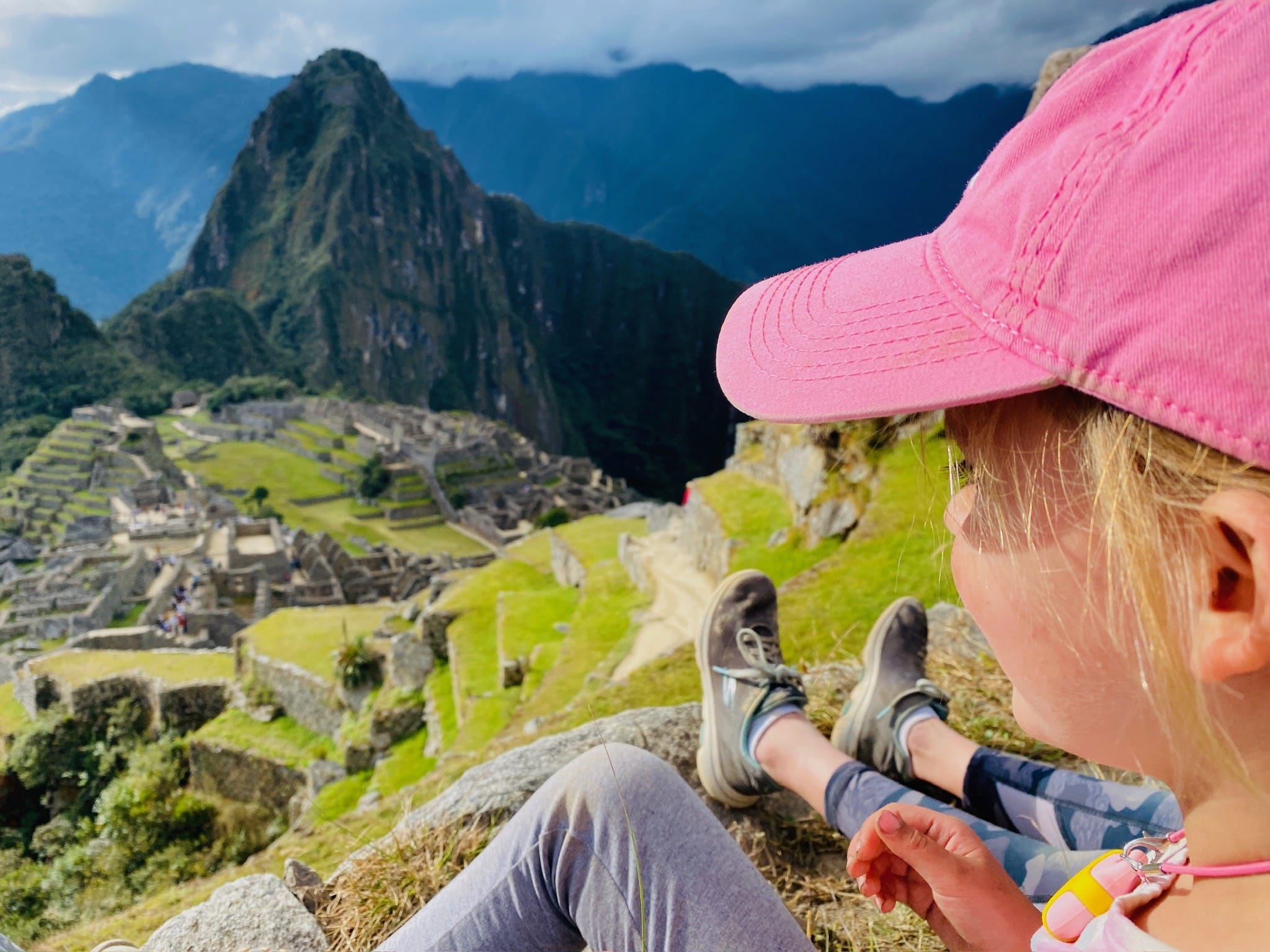
Machu Picchu is one of those places that somehow exceeds its own photographs. You have seen the image a thousand times — the terraces, the peak of Huayna Picchu behind, the stone city draped across the ridge. And then you stand there in person, and it is bigger and stranger and more moving than any photo prepared you for.
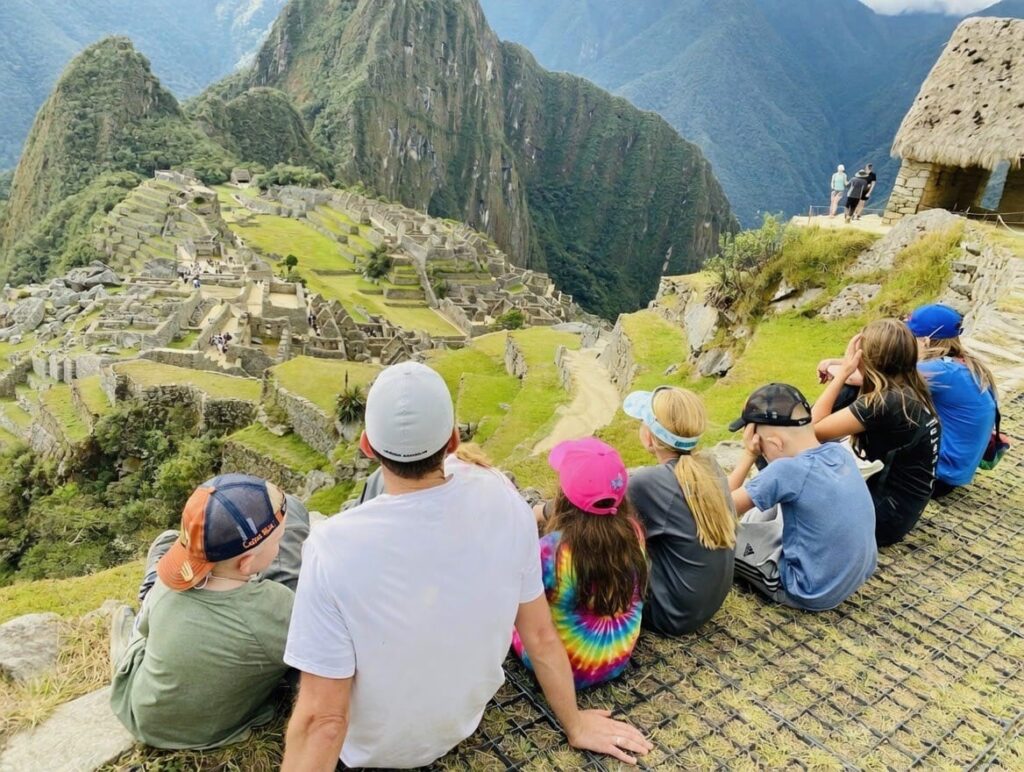
We took our family of eight, plus cousins — fourteen people in all, with children from age four to the teens. Here is the practical guide we wish we’d had: how to actually visit Machu Picchu with children, what to see, and how to handle the logistics that trip up most families.
(For the story of how our four-year-old hiked the Inca Trail to get there, see our companion post. This one is the how-to.)
First: Acclimatize in Cusco or the Sacred Valley
This is the single most important thing we can tell you, and it is the thing most families underestimate. Cusco sits at 11,200 feet. At that altitude, the air holds significantly less oxygen than your body is used to, and altitude sickness (headaches, nausea, fatigue, breathlessness) is common and can genuinely derail your trip.
What works: arrive at least one full day, preferably two, before any strenuous activity. Drink an enormous amount of water. Walk slowly — you will be out of breath after a few stairs at first, and that is normal. The locals swear by coca tea. Your doctor can prescribe acetazolamide (Diamox), which helps your body acclimatize faster. Ask about it at least a week before you travel. What does not work is ignoring it and pushing through. The ruins will still be there tomorrow.
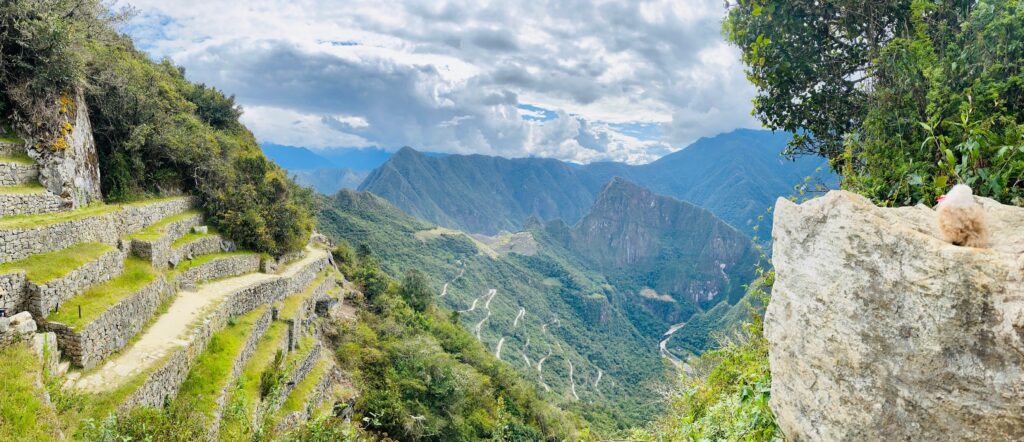
A note on the Sacred Valley: The Sacred Valley sits lower than Cusco (around 9,000 feet) and many families find it gentler for the first day or two. Towns like Ollantaytambo and Pisac have their own spectacular Inca ruins and make an excellent, lower-altitude base while you acclimatize.
Getting There
Machu Picchu is reachable only by train (or by multi-day trek). The train runs from the Sacred Valley — typically Ollantaytambo — to Aguas Calientes, the small town directly below the ruins. From Aguas Calientes, a bus carries you up the steep switchback road to the entrance. There is no road that drives you directly to Machu Picchu; everyone arrives by train and then bus, or on foot via the Inca Trail.
Tickets to enter Machu Picchu are timed and limited, and they sell out in high season. Buy them well in advance. The same goes for the train and the bus tickets. This is not a destination you can reliably show up to and improvise.
__________________________
Hire a Guide — It Transforms the Visit
Our guide, Chris, had been leading tours at Machu Picchu for most of his adult life, and he had the quiet authority of someone whose knowledge is so complete it no longer needs to prove itself. Without a guide, Machu Picchu is a stunning set of ruins. With a good guide, it becomes a story — the Sun Temple, the Temple of the Three Windows, the astronomical alignments, the way the Inca cut and fitted the stones so precisely that a knife blade won’t slide between them.
For children especially, a guide who knows how to talk to kids turns a walk through old stones into something alive. Chris adjusted the pace for our youngest, knew exactly where the children would be amazed, and answered an endless stream of questions with patience. Hire the guide. It is the best money you will spend at Machu Picchu.
What to See With Children of Different Ages
- The main overlook. The classic postcard viewpoint, where the whole city opens up below you. Get here first if you can — the light and the smaller early crowds are worth it.
- The temples. The astonishing stonework of the Sun Temple and the royal sector. Kids respond to the “knife won’t fit between the stones” detail more than almost anything.
- The llamas. The llamas wander the terraces freely and are, for younger children, frequently the highlight of the entire visit. Let them be. A photo of your child with a Machu Picchu llama is a keeper.
- The Sun Gate. The Sun Gate (Inti Punku), the high pass where the Inca Trail arrives. The classic way to reach it is via the Inca Trail, but it is also reachable as a hike from the ruins themselves — a 45-minute uphill walk from the main entrance. If your family is up for it, the view back down over the whole site from above is the best there is.
___________________________
A Practical Warning: Bring Cash
The Machu Picchu region runs largely on cash. ATMs in Aguas Calientes are limited and not always reliable. Many restaurants and shops in the Sacred Valley don’t accept cards, and your guide may require payment in local currency. Withdraw enough Peruvian soles before you leave Cusco to cover your entire time in the valley. Keep it in a money belt, not a wallet. And one hard-learned rule: if you use an ATM, do not walk away until the card is back in your hand. The cash comes out first — wait for the card.
Standing at Machu Picchu as a family — looking out over a city built five hundred years ago and abandoned to the clouds — is one of those rare travel moments that lands equally on a four-year-old and a parent. Everyone takes something different. Everyone takes something. That is what the great destinations do.
_________________________________
Planning Machu Picchu with your family? Questions about altitude, tickets, guides, or visiting with young children? Leave them in the comments — we answer every one.