
FAMILIES WHO TRAVEL — RESOURCE GUIDE
How to Pack Eight People in Carry-Ons
(And keep them there for a month)
The complete system we developed over six years and seven continents.
Why Carry-On Only? The Case Before the List
The first thing people say when we tell them we pack eight people into carry-ons is: “Impossible.” The second thing they say, once we’ve explained the system, is: “Why doesn’t everyone do this?”
Here is why it matters, beyond the obvious money savings (checked bag fees for eight passengers across multiple flights add up to several thousand dollars over a multi-week trip):
- You move faster. Through airports, through cities, onto trains, into taxis. Eight people with eight massive roller bags is a logistical operation. Eight people with eight carry-ons is a family on an adventure.
- You never wait at baggage claim. When you have young children and a connecting flight with a tight window, this is not a small thing.
- You never lose luggage. Every bag is with you, always. In six years across seven continents, we have only had one bag lost or delayed (a misrouted bag in Argentina caught up with us later that day).
- You stay flexible. When the plan changes – and it will – you can move without negotiating with checked luggage.
- It creates a useful constraint. When every person can only bring what fits in one bag, everyone gets better at deciding what actually matters.
Our carry-on standard: We use bags that meet standard international carry-on dimensions (approximately 22” x 14” x 9” or 56 x 36 x 23 cm). Each person over age five carries their own bag. For children under five, we carry it for them. Yes – we have often been that family walking through the airport with a backpack on our back, a backpack on our front, and a toddler riding on the roller carry-on. It has made the adventures possible, and memorable. Each person also carries a small personal item – a backpack or fanny-pack or tote – which holds the day’s essentials: snacks, a jacket, entertainment, and whatever that child cannot live without for seven hours on a plane.
The System: Eight Principles
1. Start with the Rule of Five
Before you pack a single item, internalize this: you only need five of everything. Five shirts. Five pairs of underwear. Five pairs of socks. (Four, actually, if you’re disciplined.) Most people pack for the length of the trip. We pack for a five-day cycle and do laundry every four to five days. This single rule cuts the volume of most people’s packing in half immediately.
When searching for Airbnbs and vacation rentals, we always filter for a washer and dryer as a non-negotiable. A machine in the apartment costs nothing and eliminates the need to pack for the full trip length. If a washer is not available, most cities have laundromats within walking distance. Budget one afternoon mid-trip for laundry. It is not glamorous. It is deeply practical.
2. Choose One Color Family and Stick to It
This sounds like a fashion tip. It is a packing strategy. If every adult packs around a single neutral color family — navy, olive, grey, black — every item mixes with every other item, which means fewer total items accomplish more combinations. We pack three bottoms (two pants, one shorts or skirt) and five tops for the adults. Those three bottoms work with all five tops. That is fifteen possible combinations from eight items. You will never wear the same thing twice in a week.
For children, the same principle applies, adjusted for the reality that children will spill things, sit in things, and occasionally roll through things. Pack one extra top per child beyond the rule of five. Consider darker colors for travel days.
3. Shoes Are the Problem. Solve Shoes First.
Shoes take up more space in a carry-on than any other item, and most people pack too many. Our rule: each person travels with two pairs of shoes maximum. One pair on your feet (always your largest or most structured pair – hiking boots or sneakers). One pair in the bag (a lightweight sandal, flat, or packable shoe).
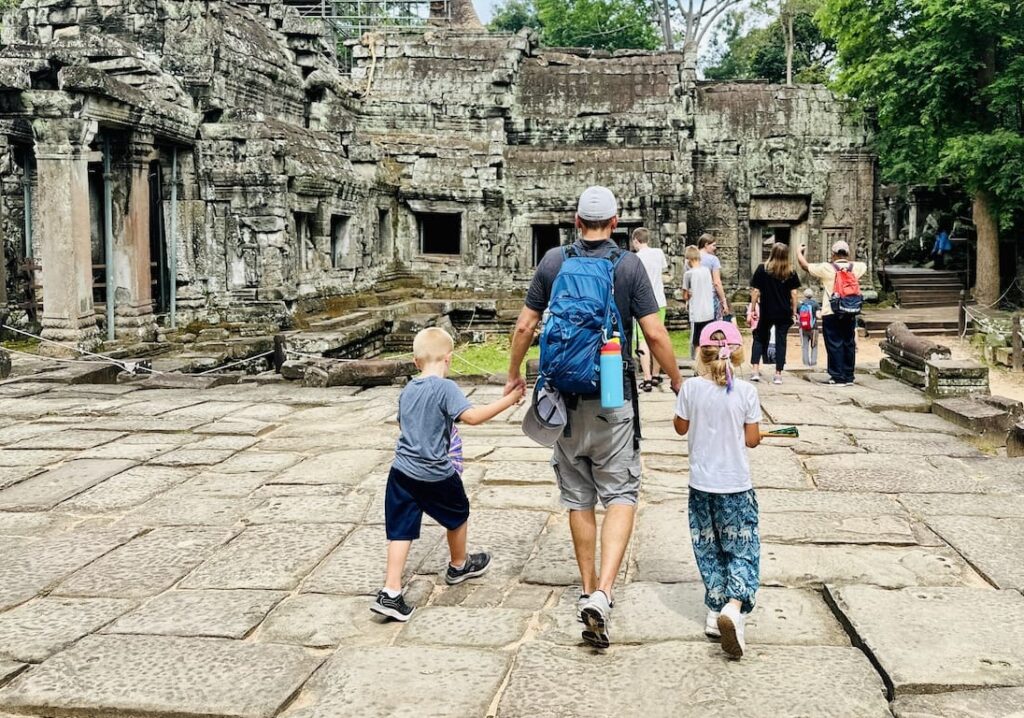
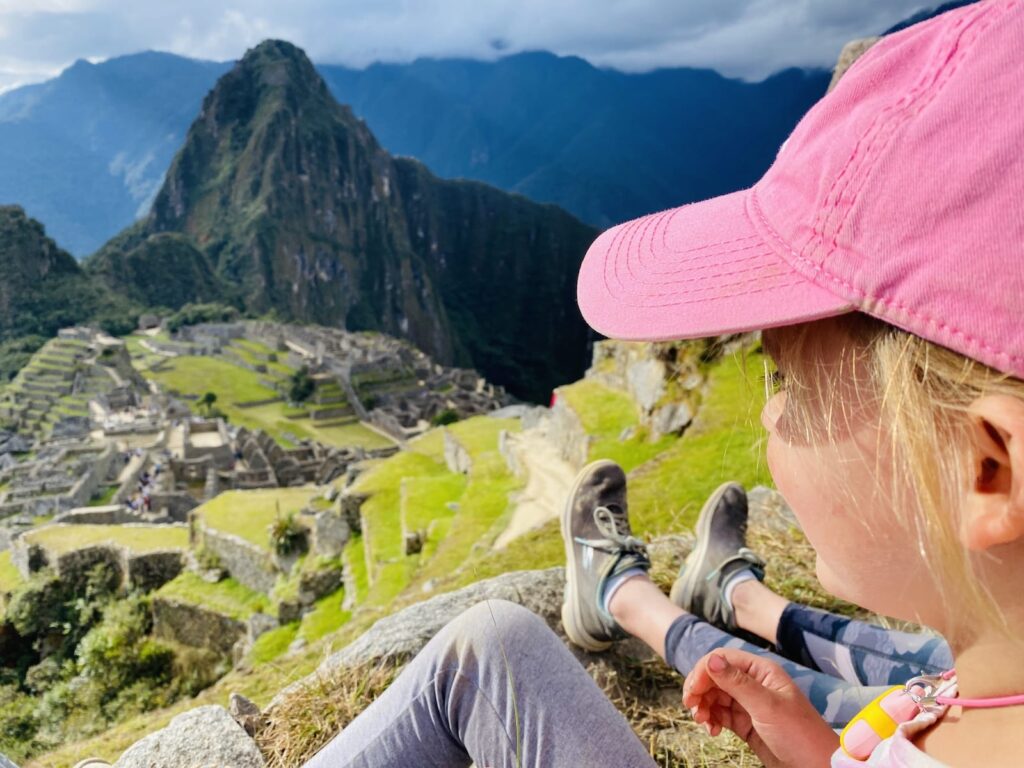
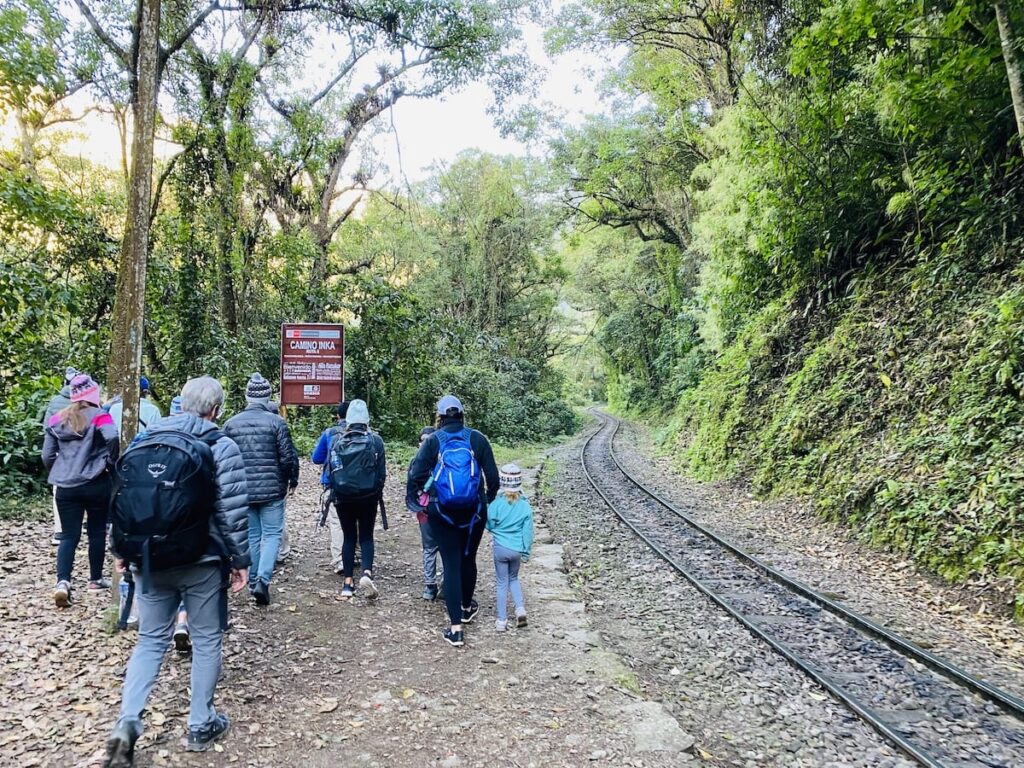
This covers most destinations and itineraries. Machu Picchu, the Sahara, Milford Sound, the Serengeti – we did all of it in hiking shoes or trail runners with a pair of sandals in the bag. If your trip involves nicer dinners or theater, one pair of clean, versatile sneakers (all-white or all-black) works for everything – we just go with the theory that we are on vacation, and we will never see these people again, so unless dressing up is mandatory (or it would be disrespectful not to), we go with what is convenient for the carry-on.
For children, the same rule applies. Their shoes are smaller, which helps. Pack the shoes they wear most, plus one backup. Nothing more. If you need to pick up an extra pair of Crocs in Egypt, they’ll be a lot cheaper than at home.
4. Pack Liquids Like a Professional Traveler
The TSA 3-1-1 rule applies to carry-ons (3.4 oz / 100ml per container, all in one quart-sized bag, one bag per person). With eight people, you have eight quart-sized bags, which is more than enough liquid capacity for any trip if you plan it correctly.
- Solid toiletries eliminate the liquid problem entirely. Solid shampoo bars, conditioner bars, and soap bars are excellent travel companions — they last longer than liquids, are not subject to size restrictions, and do not leak.
- Prescription medications are exempt from the 3-1-1 rule but should be in original containers.
- Sunscreen we often bring in a small quantity and buy at the destination. The reef-safe requirement in many countries (Australia, Costa Rica, parts of the Caribbean) means buying local is often the right call anyway.
- Travel-size containers are available at any drugstore. Purchase your preferred products before you leave. Do not buy the overpriced airport versions.
5. Compression Cubes Are Not Optional
Packing cubes — fabric organizers that compress your clothing into flat, stackable blocks — are the single item that makes carry-on travel with children possible. We use two sizes per person: one large cube for clothing, one small cube for underwear and socks. The cubes go into the carry-on like blocks into a box. Everything stays organized. Everything stays compressed. Finding a specific item no longer requires unpacking the entire bag.
Brands we have used and trust: Eagle Creek (extremely durable, worth the price), Osprey (excellent for children’s bags), and the Amazon Basics version (perfectly adequate if you’re price-sensitive). The brand matters less than the system. Get cubes. Use them every time.
6. The Kids’ Backpack Rule
Every child has a backpack as their personal item. This backpack is their responsibility. It contains: their in-flight entertainment (tablet or book), headphones, a light jacket or layer, their snacks for the travel day, one small comfort item, and their AirTag necklace when not wearing it. We do not carry their backpacks for them unless they are toddlers. We check that they have everything before we leave the accommodation, and then it is theirs.
This does two things. It lightens the adults’ load considerably over the course of a long travel day. And it gives each child ownership over their own experience from the first hour of the trip. Children who carry their own bags are, in our experience, more engaged travelers.
7. Electronics — Consolidate Ruthlessly
Electronics take up more space and weight than most people realize. Our approach for the whole family:
- One universal adapter per family (not one per person).
- One power strip with USB ports — this means one adapter at each accommodation powers everything, and everything charges together.
- Tablets over laptops for most trips. We carry one laptop for Matt’s work requirements. For children, tablets with downloaded content (Netflix, books, games) are lighter and more durable.
- We carry all electronics in Matt’s personal item backpack. We never lets it out of our sight. This helps keep track of all expensive technology, and when we go through security, we only have to take technology out of one bag instead of eight.
- One pair of noise-canceling headphones per adult. For children, inexpensive wired earbuds (several pairs — they break) or entry-level wireless headphones.
- Camera: we use iPhone cameras for 90% of our photography. If you carry a dedicated camera, it goes in your personal item, not your carry-on, to preserve clothing space.
- All cables in one small zip pouch. Label the pouch. Know where it is at all times.
8. The Night-Before Audit
Katie usually starts our packing months in advance. Our backpacks and carry-on rollers are laying out as we accumulate items for the trip and consider what we need over a long period of time. This might drive some people crazy – for us, it is a constant reminder that we have an adventure of a lifetime coming up that we can look forward to.
Regardless of how far in advance you start, twenty-four hours before you leave, do a full audit of every bag. This is not optional and is not the same as packing – it happens after packing. Lay everything out. Ask: if this bag were ten percent lighter, what would I leave behind? Something will be obvious. Leave it behind.
The night-before audit has saved us from carrying things we did not use on every single trip. The items most commonly left behind at this stage: the “just in case” outfit, the third pair of shoes that didn’t quite fit the two-shoes rule, the full-size item that could have been travel-size, and the book that was already downloaded on the tablet.
The night-before audit also helps you ensure that you don’t leave something essential behind. Sit for a minute with your bags and imagine stepping onto the airplane, doing a mental check that you have everything you need. Passports. Medications. A jacket. The essentials.
What Goes in the Bag: A Complete Packing List
This is our actual packing list, refined over six years and seven continents. Adjust for your destination, your climate, and the ages of your children.
Clothing — Adults (per person)
- 5 tops (mix of short and long sleeve, all in one color family)
- 2 pants or jeans (one casual, one slightly nicer for evenings)
- 1 shorts or skirt (climate-dependent)
- 5 underwear
- 5 pairs of socks (include one wool pair for cold destinations or long hikes)
- 1 lightweight down or packable jacket
- 1 rain jacket or packable windbreaker (doubles as an extra layer)
- 1 swimsuit (for beach, pool, or hot springs destinations)
- Shoes: 1 pair hiking shoes or trail runners (on feet), 1 pair sandals or versatile flats (in bag)
- 1 hat (sun protection is not negotiable in Australia, Egypt, Costa Rica, Peru, Cambodia, etc.)
- Pajamas: 1 set. Lightweight. They compress to almost nothin
Clothing — Children (per child)
- 6 tops (one extra over the Rule of Five for spill insurance)
- 3 bottoms (pants, shorts, or skirt — mix for versatility)
- 6 underwear
- 5 pairs of socks
- 1 packable jacket or fleece
- 1 rain layer
- Shoes: 2 pairs maximum (apply the same adult rule)
- 1 swimsuit
- Pajamas: 1 set
Toiletries (per person or shared where noted)
- Solid shampoo bar (shared between 2-3 people)
- Solid conditioner bar (shared)
- Solid or travel-size soap (or rely on accommodation soap)
- Toothbrush + travel toothpaste (toothpaste shared)
- Deodorant (solid, not spray)
- Prescription medications (original containers, carry-on always)
- Sunscreen: buy at destination or pack one travel-size; full-size in checked bag if checking
- Lip balm with SPF
- Women: menstrual products packed to the trip’s specific need
- Hand sanitizer (travel size, shared)
- Basic first aid: ibuprofen, antihistamine, anti-diarrheal, bandages, blister treatment (shared, one kit per family – see Katie’s medication system below)

Katie’s Medication System: The Travel Medicine Kit
One of the best investments we ever made was a compact medication organizer – the kind with multiple labeled compartments that folds flat. Katie sources hers from Amazon, where several excellent options hold a surprising quantity of medications in a genuinely compact package. The weight is negligible. The value, when you are in a small Costa Rican town at 10pm with a child who has developed a fever and the nearest pharmacy is forty minutes away on a dirt road in the dark, is considerable.
What goes in ours: pain reliever and fever reducer in both adult and children’s formulations; antacid for indigestion; anti-diarrheal medication – traveler’s stomach is real, it will visit at least one member of your party on a long trip, and you want to address it immediately rather than searching for a pharmacy in a language you don’t speak; a constipation remedy, because long-haul flights and unfamiliar food do things to the digestive system that are the precise opposite and equally inconvenient; antihistamine for allergies and as a mild sleep aid on overnight flights; throat lozenges; a cough suppressant; blister treatment; and a basic wound care kit — bandages, antiseptic wipes — for the inevitable scraped knee or, in our case, the child who stepped on a rusty nail barefoot in the Amazon.
Beyond the over-the-counter layer, prescriptions matter too. For destinations involving significant traveler’s diarrhea risk – Central America, South America, Southeast Asia, Africa – ask your doctor about an antibiotic you can take at the first sign of serious symptoms rather than waiting to find a clinic abroad. For jungle destinations, discuss malaria prophylaxis. For ocean voyages, Scopolamine patches. For high-altitude destinations like Peru, acetazolamide. A travel medicine clinic can advise you specifically based on your itinerary. Your travel medicine appointment is also the right time to address any required or recommended vaccinations for your destination. Make that appointment at least eight weeks before departure, because some medications require time to take effect. The fifteen minutes it takes to have that conversation is the most efficient health preparation you can make.
The rule: You will almost certainly not use most of what you pack. You will be very glad to have it when you do.
Documents & Money (personal item or on your body)
- Passport — always on your body or in your personal item, never in checked or overhead luggage (Matt keeps all passports in a fanny pack with him at all times on travel days)
- Physical copies of all passports in a separate location from the originals (and electronic copies on a cloud drive)
- Travel insurance documentation (printed and photographed on phone)
- Accommodation confirmations (downloaded offline)
- Cash in local currency for the first 24 hours at destination
- 2 debit cards and 2 credit cards (different networks – Visa and Mastercard) in separate locations (more on that later)
- Emergency contact card for each child in their backpack
- A neck wallet, money belt, or other form of travel wallet that is not accessible to a pickpocket.
- Matt carries a dummy wallet in his pocket with canceled cards and minimal cash – a decoy that has never yet been tested but that we remain quietly prepared for.
Electronics (whole family)
- 1 universal power adapter
- 1 power strip with USB ports
- Tablets (1 per child; adults share or bring phone)
- 1 laptop (if required for work)
- Headphones per person (noise-canceling for adults, basic for children)
- All charging cables in one labeled zip pouch
- AirTags (1 per child, in silicone necklace holder – we also keep on in Matt’s backpack with all of our expensive items)
- Portable battery pack (1 per adult – invaluable on long travel days)
Extras Worth Every Gram
- Lightweight microfiber travel towel (1 per person) – for beach or pool destinations, and some Airbnbs have limited towels for large groups
- Reusable water bottles. These can attach to the outside of a personal item backpack if necessary
- Wet wipes (travel pack) – worth their weight in gold with young children on long flights
- Dry bag – for wet swimsuits, muddy shoes, or anything that needs to be contained
- Small day pack (packable, folds into itself) – for day trips where you don’t need the full carry-on
- Melatonin – for jet lag management, especially for children crossing many time zones
What to Leave at Home
The items below appear in most people’s bags and almost never get used:
- Hair dryer – nearly every accommodation provides one.
- More than two pairs of shoes – we have addressed this. It bears repeating.
- “Just in case” outfits – the outfit that will be perfect for the fancy dinner that might happen. Pack the outfit you will actually wear to the dinner you have actually planned.
- Full-size anything – shampoo, conditioner, lotion, body wash. All of it exists at every destination in the world. Buy it there if you run out.
- Physical books beyond one – download everything. Kindles and tablets carry entire libraries.
- Anything you haven’t touched in the last month at home – this is the truest test. If you’re not using it at home, you will not use it in New Zealand.
A Few Destination-Specific Notes
Cold weather destinations (Antarctica, New Zealand winter, mountain hiking)
Hot and humid destinations (Amazon, Costa Rica, Southeast Asia)
Quick-dry fabric is non-negotiable. Cotton holds moisture and takes days to dry in humidity. Merino wool or synthetic quick-dry fabrics (Uniqlo, REI Co-op, Columbia) dry overnight and resist odor better than cotton, which means they can be worn more times before washing. This is one of the single best investments you can make before a tropical trip.
Safari (Africa)
Neutral colors only — khaki, olive, tan, brown, grey. Bright colors disturb wildlife and are actively discouraged by guides. Do not pack your favorite red shirt. Pack nothing white (dust). Everything should be easy to wash and quick to dry. Mornings and evenings in the Serengeti are cold; afternoons are very hot. The layering system applies here too.
Religious and cultural sites (Egypt, Jordan, Southeast Asia)
Every person needs a modesty layer — something that covers shoulders and knees. A lightweight scarf or sarong is the most versatile solution and takes up almost no space. Keep it in your day pack. You will use it at temples, mosques, and churches throughout the trip without having to change your full outf

One last thing.
The first time you pack carry-on only for a big trip, it will feel like not enough. The second time, it will feel normal. The third time, you will wonder how you ever traveled any other way.
We have packed eight people into carry-ons for our major trips of the last six years. We have never wished we had brought more.
Start small. Start with one bag. The rest follows.
Want This Guide as a Printable PDF?
The Families Who Travel Family Packing List
Clean, printable format. Every item, nothing extra.
Includes: complete clothing list by age • toiletries and medications • documents and money •
electronics • extras worth every gram • destination-specific reminders • the night-before audit checklist
Already subscribed? Click here to download directly.